About this kit
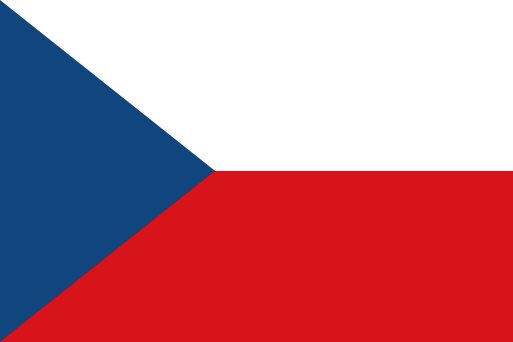
Czech is spoken by 11 million people in the Czech Republic. A West Slavic language written in a Latin alphabet enriched with hacek (carons), it precisely distinguishes formal and informal address. From Prague to the Giant Mountains, this kit gives you the bare minimum to find your way in the country of Kafka and Kundera.
Czech (cestina) is the official language of the Czech Republic, spoken by around 11 million people. A West Slavic language belonging to the same branch as Polish and Slovak, Czech is so close to Slovak that the two languages remain largely mutually intelligible. Czech is written in a Latin alphabet enhanced with specific diacritics: the small v-shaped hacek (š, č, ž, ř) that modify pronunciation, and the acute accents that mark long vowels. The letter ř, unique in the world, combines a rolled r and a fricative and remains one of the most difficult sounds for non-natives. Czech grammar uses seven cases and three genders, which makes it a rich but demanding language. But for the traveller, the essentials come down to a few polite formulas, mastering the pair 'Dobry den' (formal hello) and 'Na shledanou' (formal goodbye). Czech culture is marked by absurdist humour, a dense literature (Kafka, Hasek, Kundera, Havel), a recognized cinema (the Czech New Wave of the 1960s) and a thousand-year brewing tradition that places the Czech Republic at the top of world per-capita beer consumers. Prague, Brno, Cesky Krumlov and spa towns like Karlovy Vary attract millions of travellers every year. This kit gathers the bare essentials to handle an arrival in Prague, a tram ride, an order in a traditional hospoda, a medical emergency and a smooth departure. Memorize these expressions before leaving and you will gain confidence from the very first hours on site.






 Learning Moroccan Darija
 Learning Spanish
 Learning Polish
 Learning Algerian Darija
 Learning Sudanese Arabic
 Learning Egyptian Arabic
 Learning English