Free survival kit

Amharique survival kit

The 20 essential phrases and 100 key words to get by in Amharique when travelling.

Start for free
  • 20 phrases
  • 100 key words in the PDF
4.9Excellent onTrustpilot

Greetings

AmhariqueEnglish
selamhello, peace
tena yistiligngood day (formal)
indemin nehhow are you (m.)
indemin neshhow are you (f.)
dehna negnI'm fine
ameseginalehuthank you
awoyes
aydellemno, it is not

Asking for directions

AmhariqueEnglish
bethouse
təmhərt betschool
gäbäyamarket
kätämacity

Emergencies

AmhariqueEnglish
rashead
ayneye
joroear
afmouth

At the restaurant

AmhariqueEnglish
wəhawater
wätätmilk
enjerainjera (flatbread)
dabbobread

30 key words to remember

AmhariqueEnglish
ebakihplease (m.)
ebakishplease (f.)
yikirtasorry, excuse me
dehna hungoodbye (m.)
tadiyashi (informal)
näbbärähe was, existed
näwhe/it is
alläwhe has
hedähe went
mättahe came
bällahe ate
tättahe drank
tännahe slept
tänagärähe spoke
alähe said
sämmahe heard
ayyähe saw
awwäqähe knew
fällägähe wanted
čalähe could, was able
särrahe worked
gäzzahe bought
šäṭähe sold
säṭṭähe gave
wässädähe took
anäbbäbähe read
ṣafähe wrote
wäddädähe loved
abbatfather
ennatmother

In context: 5 scenes to get by

On arrival

You arrive in Addis Ababa and greet your host. A "selam" (peace) is enough in most cases, or a more formal "tena yistilign". Depending on gender, you ask "indemin neh" (to a man) or "indemin nesh" (to a woman).

  • selam : hello, peace
  • tena yistilign : good day (formal)
  • indemin neh : how are you (m.)
  • indemin nesh : how are you (f.)

In a taxi

The taxi or bajaj driver asks for your destination. You indicate the "bet" (house), "təmhərt bet" (school), "gäbäya" (market) or "kätäma" (city) you are heading to. Confirm the fare before leaving.

  • bet : house
  • təmhərt bet : school
  • gäbäya : market
  • kätäma : city

At the café

At the restaurant, you order water ("wəha"), milk ("wätät") for your buna, injera (the teff flatbread) or bread ("dabbo"). "Ebakih" (to a man) or "ebakish" (to a woman) opens a polite request.

  • wəha : water
  • wätät : milk
  • enjera : injera (flatbread)
  • dabbo : bread

In an emergency

You don't feel well: your head ("ras") aches, your eye ("ayn") burns, your ear ("joro") rings, your mouth ("af") is dry. You point to the area and name the body part. Pointing often saves time before a diagnosis.

  • ras : head
  • ayn : eye
  • joro : ear
  • af : mouth

On departure

Before leaving Lalibela or Gondar, you answer "dehna negn" (I am fine) to last questions. You thank with a sincere "ameseginalehu". "Awo" (yes) or "aydellem" (no) close the last exchanges.

  • dehna negn : I'm fine
  • ameseginalehu : thank you
  • awo : yes
  • aydellem : no, it is not

Cultural notes

  1. Amharic is written with Fidel, the Ethiopian abugida inherited from Ge'ez. Each character represents a consonant followed by a vowel, and the system counts over 200 signs. Even learning greetings in Fidel impresses Ethiopians.
  2. Politeness forms differ by gender: you say "indemin neh" (how are you?) to a man, "indemin nesh" to a woman. This gender distinction runs through the whole grammar and deserves to be memorised.
  3. Injera, a fermented teff flatbread, is at the heart of Ethiopian cuisine. People eat by hand, sharing the same large dish. Refusing to taste can come across as cold.
  4. The coffee ceremony (buna) is a major social ritual that can last over an hour. Being invited to share one means being accepted. Declining without reason is almost unthinkable.
  5. Ethiopia has its own calendar (seven or eight years behind the Gregorian one) and its own way of counting hours (the day starts at 6am = 0:00 Ethiopian time). Double-check for appointments.
  6. The Ethiopian Orthodox Tewahedo Church plays a central role. Rituals are solemn, young people still largely practise, and many feasts (Genna, Timkat, Meskel) shape the year.
  7. "Ameseginalehu" is the formal thank-you: a long, melodic word. For everyday use, "Amesegnalehu" works, but attention paid to politeness is much appreciated.
  8. At the Mercato in Addis Ababa, bargaining is expected. Greeting in Amharic before discussing prices always shifts the tone of the negotiation.

Keep the whole kit on your phone

The 20 phrases, 100 key words and the cultural notes in a PDF to keep offline or print. We also send it to you by e-mail.

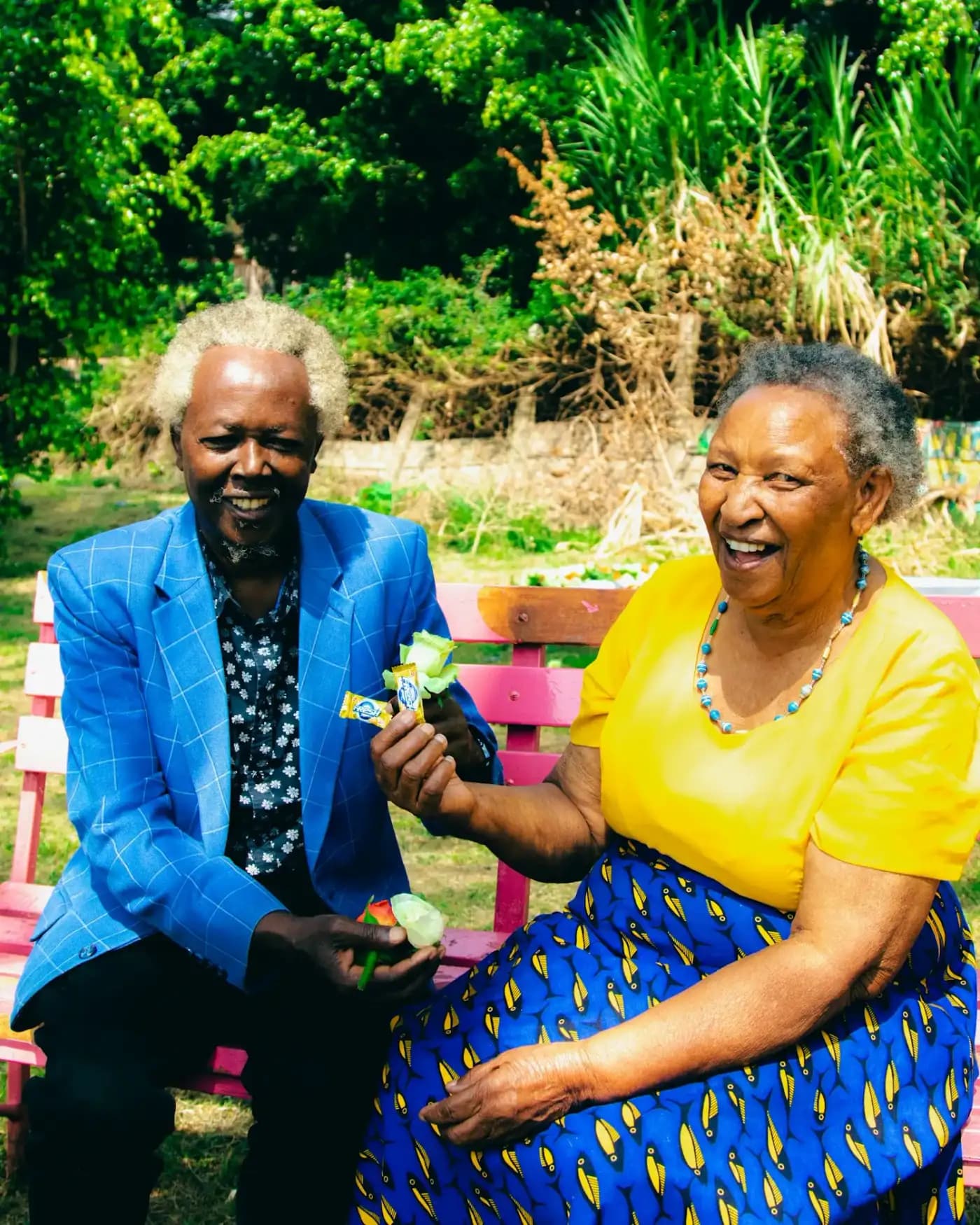
A grandparent couple laughing on a bench
A family language

Reconnect with Amharic

The language of your parents, your grandparents or your partner. The one you want to pass on to your children.

A smiling couple in matching outfits
Speaking the language of the country means reconnecting with its people.
A mother holds her baby close
Now, at home, we speak Amharic.
A woman smiles on the phone
“Hi Mum, I speak Amharic!”
A father and his son, side by side
Children who speak Amharic are the greatest cultural wealth you can bring to your family.
A family with two young children
Your grandparents’ Amharic should not end with them.
  • Finally understand what is said at the table, and answer back.
  • Your in-laws speak Amharic to you. Answer them in Amharic.

A language is passed down from generation to generation. Now it is your turn.

Start Amharique for free

About this kit

Amharic is spoken by around 35 million people in Ethiopia, where it is one of the official languages. Written in the unique Ge'ez (fidel) script, it is the language of Africa's second most populous nation. With this kit, you have the bare minimum to greet, find your way and order food during a trip to Addis Ababa, Lalibela or Gondar.

Amharic (Amarinya) is a Semitic language spoken by around 35 million people in Ethiopia, where it is an official language alongside Oromo, Tigrinya and a few others. It is the mother tongue of the Amhara, the country's second ethnic group, and a lingua franca for millions of Ethiopians of other origins, especially in cities.

Descended from Ge'ez, Amharic retains its abugida, Fidel: a unique writing system in which each sign represents a consonant combined with a vowel. This written tradition goes back to the Aksumite kingdom (1st to 7th centuries), one of the great civilisations of late antiquity. Literature in Ge'ez and then in Amharic still nourishes the Ethiopian Orthodox Tewahedo Church, deeply anchored in national culture.

Amharic grammar is typically Semitic, with a tri-consonantal root system and rich verbal morphology. Gender marking is central: "neh" is said to a man, "nesh" to a woman. For travellers, Amharic offers an exceptional gateway to a millennia-old culture: Addis Ababa, Lalibela, Gondar, Aksum, Lake Tana and the Simien are all places where a sincere "selam" opens warm conversations.

This kit gathers the bare essentials to handle an arrival in Addis Ababa, a taxi or bajaj ride, a market order, a small medical concern and a smooth departure. You will find indispensable greetings, survival words for orientation, key vocabulary for daily life and cultural tips to avoid faux pas. Memorise these expressions before leaving and you will gain confidence from the first hours on the ground.

They trust Targumi

They used Targumi to learn a language

4.9Excellent onTrustpilot

In their own words

Armande Learning Moroccan DarijaRated Targumi 5/5
Walid Learning Moroccan DarijaRated Targumi 5/5
Leonie Learning Moroccan DarijaRated Targumi 5/5
Marta Learning SpanishRated Targumi 5/5
Whitney Learning PolishRated Targumi 5/5
Didier Learning Moroccan DarijaRated Targumi 5/5
Dorian Learning Algerian DarijaRated Targumi 5/5
Isabelle Learning Moroccan DarijaRated Targumi 5/5
Patrick Learning Moroccan DarijaRated Targumi 5/5
Samia Learning Sudanese ArabicRated Targumi 5/5
Amina Learning Egyptian ArabicRated Targumi 5/5
Mélanie Learning Algerian DarijaRated Targumi 5/5
Hossin Learning EnglishRated Targumi 5/5
Soahary Learning EnglishRated Targumi 5/5
Start Amharique for free
  • 7-day free trial
  • No commitment
  • Cancel in 1 click

Go further in Amharique

All Targumi resources for this language.

Amharique level test

Assess your CEFR level in 5 minutes.

Amharique cultural quiz

Films, music, traditions. How well do you know?

Amharique articles

Guides, methods and tips to progress.

Amharique vocabulary

Essential words and phrases organised by themes.

Cultural resources

Films, series, podcasts and music to immerse yourself.

Start now

Live classes with a bilingual native teacher. First lessons free.